I Was 3 Months From Retirement When a Call to an Abandoned House Led Me to a Little Girl. What She Was Clutching in Her Hand Unraveled a Conspiracy That Reached the Highest Levels of Power.
“Officer Harrison.” A tired voice cut through my thoughts. I looked up to see Dr. Eleanor Bennett, her silver-rimmed glasses perched on her nose, a file in her hand.
“How is she?” I asked, getting to my feet.
Dr. Bennett gestured me back to the chairs. “She’s stabilized, but her condition is severe. Severe malnutrition, dehydration, and a respiratory infection we’re treating aggressively.”
“Is she going to…” I couldn’t finish the sentence.
“She’s responding to treatment,” Dr. Bennett said, her expression softening. “She’s a fighter, that one. But I’m more concerned about what’s going on beyond her physical condition.” I nodded, understanding the unspoken message. “Has she said anything? Told you her name?”
“Nothing yet. We’ve registered her as a Jane Doe for now.” The doctor hesitated. “Officer… there are signs that worry me. The marks on her wrists and ankles suggest long-term confinement. And her reaction to basic things—a television, even the hospital food tray—indicates she may have been isolated for a prolonged period.”
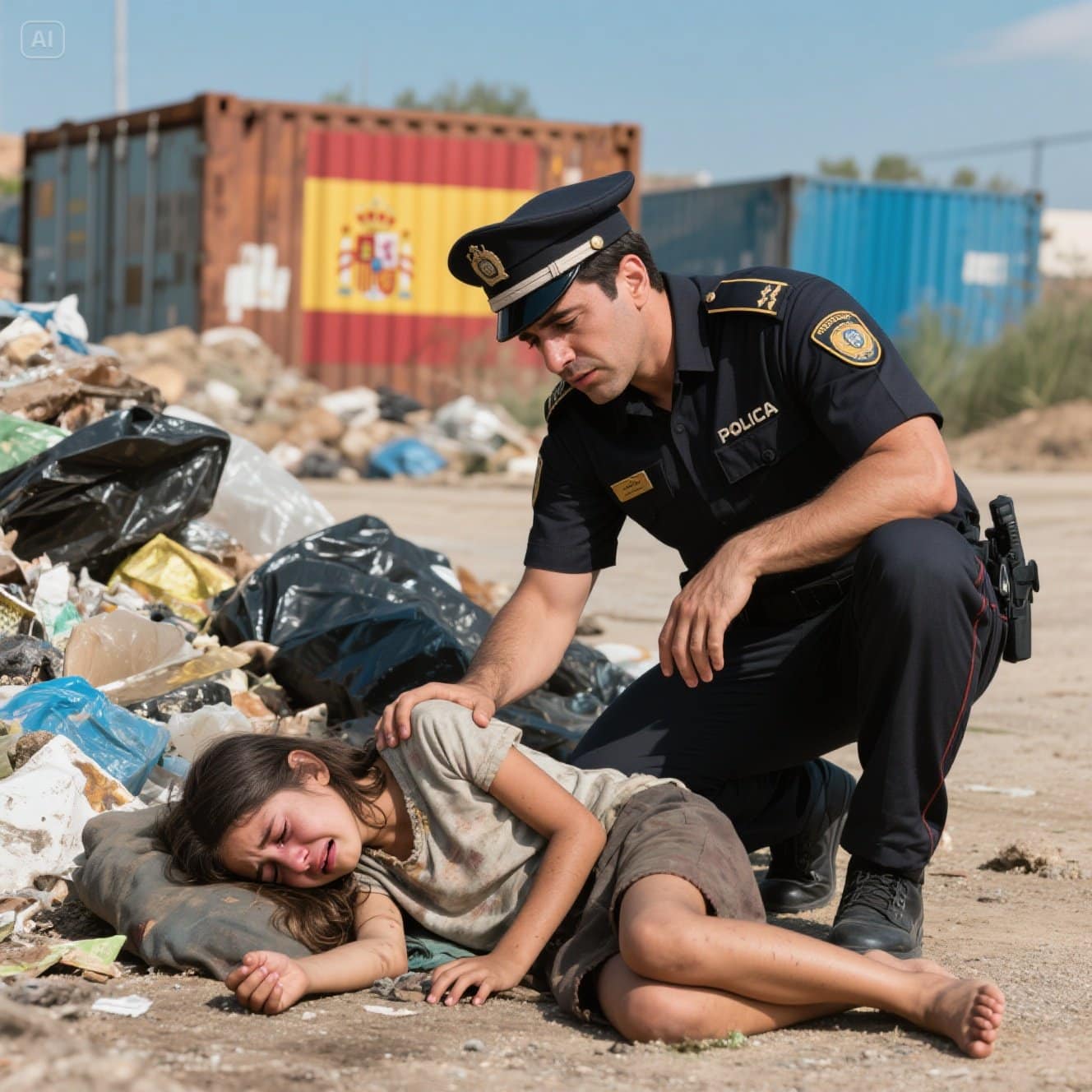
My jaw tightened. “I found something in her hand,” I said. “A bracelet with the name ‘Maila’ on it.”
“It could be her name, or someone important to her,” Dr. Bennett noted. “We’ll try using it when she wakes up.”
“When can I see her?” I asked.
“She’s sleeping now. Come back in the morning.”
As I walked through the hospital parking lot, my phone rang. It was Captain Reynolds. “Harrison, what’s this I hear about you finding a kid? Report just hit my desk.”
“A little girl, Captain. Severely neglected. Found her on a derelict property on Maple Street,” I answered, climbing into my patrol car.
“Social services will handle it. They’ve been notified, but she’s in no condition to be questioned.” A pause on the line. “Look, Tom. I know you’re on your way out. Don’t get too tangled up in this one. Standard procedure. File your report. Let the system take over.”
I watched as raindrops began to speckle my windshield. “She had a bracelet,” I said. “The name on it was Maila. I’m going to check the property records for that house tomorrow.”
A heavy sigh from Reynolds. “Just remember, you retire in three months. Don’t make it complicated.”
But as I drove through the darkened streets, I knew it was already complicated. Something in those eyes reminded me of someone—someone I’d failed a long time ago.
The next morning, I returned to the hospital with a small teddy bear I’d picked up at the gift shop. A young nurse named Sara met me in the pediatrics wing with a warm smile. “Officer Harrison. Dr. Bennett said you might be by. Our Jane Doe is awake.” Her smile faltered. “But she’s not responding much to anyone.”
Sara led me to a small room where the girl sat propped up in bed, her frail frame almost lost in the sheets. Her eyes—those same deep brown eyes—locked onto me instantly.
“Hello there,” I said softly, approaching the bed slowly. “Remember me? I’m the one who found you yesterday. I brought you something.” I placed the bear at the foot of the bed, careful not to move too fast. She just stared, unblinking. “I was wondering… is your name Maila?” I tried. “Is that your name, sweetheart?”
Something flickered in her eyes. Not recognition of the name, but something else. Her gaze shifted to the bracelet, which now rested on the bedside table. I followed her look. “Is Maila someone you know? Or something important to you?”
Her lips parted slightly, but no sound came out.
“That’s the most response we’ve gotten from her all morning,” Sara whispered from behind me.
I sat in the chair by the bed. My gut told me not to push. Instead, I just started talking, my voice low, about simple things. The weather, the friendly squirrel I’d seen on the hospital grounds, the kind nurses. As I spoke, I noticed her shoulders relax just a fraction. Her fingers gradually loosened their grip on the sheet. When I finally got up to leave, promising to come back, the girl’s hand suddenly moved—a small, quick gesture toward the bracelet.
I paused. “I’m going to help you figure out what happened, little one,” I said quietly. “I promise.”
Leaving the hospital, I made a decision that defied my captain’s warning. This wouldn’t be just another case file. This girl wasn’t just another statistic to be processed by the system. I would find answers, even if it meant pushing back my retirement. Even if it meant reopening my own painful past.
The derelict house on Maple Street stood silent under the morning sun, its faded blue exterior clashing with the crime scene tape now framing the property. I ducked under the yellow barrier, my badge glinting as I approached the front door.
“Morning, Harrison,” greeted Detective Miller, who’d been assigned the case. “Thought you’d be enjoying your pre-retirement days on easy patrols.”
I shrugged. “Just following up. The kid’s condition is still critical.”
“Well, we did the preliminary sweep,” Miller said, flipping through his notepad. “No signs of forced entry, no evidence of other occupants. Honestly, looks like she could have just been a homeless kid looking for shelter.”
My gut told me otherwise. “Mind if I take another look?”
“Be my guest. I’m heading back to the station.” Miller handed me a pair of gloves. “Sometimes I think you forget you’re almost retired.”
Once Miller’s car disappeared down the street, I stood in the doorway, taking in the house with fresh eyes. Dust coated most surfaces, but as I moved through the living room, subtle details caught my attention. A sofa with an indentation in one cushion. A shelf with dust-free rectangles where objects had recently sat. “Someone was living here,” I muttered to myself.
The kitchen told a more revealing story. Opening the refrigerator, I found what the initial sweep had missed: a carton of milk that had expired only a week ago. In the pantry, a half-empty box of children’s cereal. These were not signs of abandonment from months or years ago.
I moved methodically through the house, documenting everything with my phone’s camera. Upstairs, the bathroom held a child’s toothbrush and a small comb with strands of dark hair. In what looked to be the master bedroom, I found an unmade bed and women’s clothing in the closet—all pointing to recent occupation. But it was the second bedroom that sent a chill down my spine.
The door was locked from the outside with a sliding bolt.
I stared at the lock, my heart hammering. After carefully photographing it, I slid the bolt and pushed the door open. The room was sparse: a small bed with thin sheets, a lamp, a few children’s books stacked neatly in the corner. What struck me wasn’t the meager possessions, but the contrast. While the rest of the house showed neglect, this room was meticulously kept. The bed was made with perfect hospital corners. The books were arranged by size. On the wall hung a child’s drawing—a stick figure of a girl holding what looked like a doll, with the sun shining down on them. In crude lettering at the top were the words: “Me and Maila.”
“It’s not her name,” I whispered, photographing the drawing. “It’s her doll.”
As I turned to leave, something caught my eye—a small slip of paper peeking out from under the bed. Kneeling, I retrieved what turned out to be a creased photograph, worn from handling. It showed a haunted-looking woman holding a baby wrapped in a pink blanket. The woman’s smile seemed forced, her gaze distant. I flipped the photo over. Scrawled in faded ink were the words: Liliana and Amelia, May 2017.
“Amelia,” I repeated softly. “Could this be the girl’s real name?”
In the hallway, I noticed something I’d missed initially: a calendar hanging on the wall. The days were methodically crossed off until October 3rd. Just three weeks ago. Next to that date was a single word: Medicine.
My phone buzzed, startling me in the silence of the house. It was Sara, the nurse. “Officer Harrison, I thought you should know. Our Jane Doe just said her first word.”
I gripped the phone tighter. “What did she say?”
“It wasn’t very clear, but it sounded like… ‘Mama.’ She got very agitated afterward, so the doctor gave her a mild sedative. She’s resting now.”
“I’m on my way,” I said, already heading for the door. “And Sara? I think her name might be Amelia.”
As I drove to the hospital, the pieces began to click into place. A recently occupied house, a locked room, a mother and daughter named Liliana and Amelia, and a mysterious object named Maila that meant the world to a traumatized little girl. What had happened in that house? Where was Liliana now? And most importantly, what would happen to Amelia when the system took over? I gripped the steering wheel tighter, the photo of mother and child tucked safely in my pocket. My captain had warned me not to get involved, but it was already too late. Some cases become personal, not by choice, but by necessity. This was one of them.
I arrived at the hospital, photo in hand, my cop instincts on high alert. The pediatric wing was quiet, save for the steady beeping of monitors and the soft squeak of nurses’ shoes on linoleum.
“She’s been asking for you,” Sara said, leading me down the hall. “Not by name, but she keeps looking toward the door whenever someone passes.”
“Has she said anything else?”
Sara shook her head. “Just that one word. The doctors say it’s normal for kids who’ve been through trauma to be selectively verbal.” She paused outside the room. “She doesn’t respond well to men in uniform, so…” I nodded, removing my badge and tucking it into my pocket.
The girl—Amelia, if my hunch was right—was sitting up in bed, her small hands methodically arranging the stuffed animals the hospital staff had brought her. As I entered, her eyes immediately locked on me, wide and watchful.
“Hello again,” I said softly, keeping my distance. “I brought something I thought you might want to see.” I slowly approached and placed the photograph on the bed.
The girl’s reaction was immediate. A sharp intake of breath, her little hand reaching out to touch the woman’s face with soft, trembling fingers.
“Is this your mommy?” I asked. “Is her name Liliana?”
The girl’s eyes welled with tears, but she remained silent.
“And is your name Amelia?”
At this, she looked up. A tiny, almost imperceptible nod confirmed what I’d suspected.
“Amelia,” I repeated, my voice warm with relief. “That’s a beautiful name.” A single tear rolled down her cheek as she clutched the photo to her chest.
I sat in the chair by her bed, careful not to make any sudden moves. “Amelia, I want to help you. I want to find out what happened and make sure you’re safe. Can you help me understand who Maila is?”
At the mention of Maila, Amelia’s expression shifted. A flash of longing, of desperate need. Her free hand moved to her wrist, where the bracelet had been.
“Maila is your doll,” I asked gently. Another slight nod, more tears welling.
I leaned forward, my voice soft but determined. “I will try to find Maila for you, Amelia. I promise.”
After leaving Amelia’s room, I headed straight for the station. My destination: the records department. I needed to know everything about Liliana Montes and the house on Maple Street.
“Well if it isn’t the almost-retired Harrison,” chuckled Gloria, the department’s archivist for over twenty years. “What can I dig up for you today?”
“Property records for 1623 Maple Street. And anything we have on a woman named Liliana Montes who might have lived there with her daughter, Amelia.”
Gloria’s fingers danced across her keyboard. “Last name’s unknown for now.” She raised an eyebrow but kept typing. After several minutes, she turned the monitor toward me. “Property was purchased eight years ago by one Liliana Montes, age 32 at the time of purchase. No mortgage. Paid in cash, which is unusual for that neighborhood.”
“Any police record?”
Gloria’s expression turned grim as she pulled up another file. “One domestic disturbance call, nine years ago. Liliana Montes and a man named Robert Grant. She refused to press charges.” Gloria kept scrolling. “And here’s something else. A missing person’s report filed three years ago by a Martin Hemlock.”
“Who’s Martin Hemlock?”
“Says here he was her social worker. Department of Child and Family Services.”
My pulse quickened. “Any indication what happened to her?”
Gloria shook her head. “Report was filed. Preliminary investigation was done, but nothing conclusive. The case went cold.” She looked at me with knowing eyes. “This is about the kid you found.”
I nodded. “I need everything you can get me on Martin Hemlock.”
While Gloria searched for the contact information, I looked over the property records. Liliana Montes had paid £35,000 cash for the house. A significant sum for someone with no visible employment history.
“Here’s Hemlock,” Gloria said, handing me a slip of paper. “Retired two years ago. Lives out in West Hill now.”
I pocketed the info. “One more thing. Any record of a child under Liliana Montes’ name? Birth certificate, school enrollment, medical records?”
Gloria’s search came up empty. “Nothing in our system. If she had a daughter, there’s no official record of her.”
I frowned. “That’s not possible. Every child has a birth certificate.”
“Unless,” Gloria lowered her voice, “unless the birth was never registered. Happens more than you’d think.”
As I walked to my car, the pieces swirled in my mind: a house bought with cash, a woman reported missing by her social worker, a child with no official records, and somewhere out there, a doll named Maila who meant everything to a girl who’d lost it all.
My phone rang. Captain Reynolds. “Harrison, what are you doing? Miller tells me you’re still poking around that abandoned house.”
“The house wasn’t abandoned, Captain. A woman named Liliana Montes was living there with her daughter, our Jane Doe. The girl’s name is Amelia.”
A deep sigh from Reynolds. “Tom, social services is sending someone over tomorrow. This isn’t our jurisdiction anymore.”
“Something’s not right about this case,” I pushed. “The kid was locked in a room. There are no official records of her existence. And the mother was reported missing three years ago but was somehow still living in that house until recently.”
“And you’re going to solve all this in your last three months on the force?”
I watched a family walk past my parked car, the parents swinging a laughing little girl between them. The simple joy of their connection sent an ache through my chest. “Someone has to,” I said quietly.
“Don’t make me order you off the case, Harrison.”
I ended the call without replying, already plotting my next move. I would visit Martin Hemlock tomorrow. The retired social worker might be the key to understanding what happened to Liliana Montes, and by extension, to Amelia. As I started my car, I couldn’t shake the image of Amelia’s face when she saw the photograph of her mother. Behind the trauma and fear, I’d glimpsed something else. Hope. I wouldn’t let that hope be extinguished. Not while I still had a badge. Not while I could still make a difference.
The morning light streamed through the hospital windows as I entered Amelia’s room, carrying a small gift bag. It had been three days since I found her, and the difference was remarkable. Her cheeks had more color, and the doctors had removed some of the monitoring equipment.
“Good morning, Amelia,” I said brightly. “I brought you something.”
Amelia watched me with those intelligent eyes that seemed to hold so many unspoken words. I placed the gift bag on her bed. “Go on, open it.”
With careful movements, Amelia reached into the bag and pulled out an assortment of small dolls—different sizes, shapes, and materials. I’d spent the evening visiting every toy shop in the area, hoping one might resemble the mysterious Maila.
“I thought maybe one of these might look like your special friend,” I explained, watching her reaction closely.
Amelia examined each doll meticulously, her expression falling with each one that wasn’t Maila. After setting the last doll aside, she looked up at me with a disappointment so profound it made my heart ache. “I’m sorry, Amelia. I’ll keep looking.”
Sara came in with a breakfast tray. “How are we this morning?” she asked cheerfully, setting the tray on the bedside table.
“We were hoping one of these dolls might be like her Maila,” I explained.
Sara studied the collection. “These are all factory-made dolls. Maybe Maila was something special. Handmade, perhaps?”
The suggestion sparked something in my memory. The crude stitching on Amelia’s bracelet. “You might be right.”
While Sara helped Amelia with her breakfast, I stepped into the hall to call Martin Hemlock, the retired social worker. To my surprise, Hemlock agreed to meet with me that afternoon. When I returned to the room, I found Sara sitting by Amelia’s bed, showing her a picture book.
“Officer Harrison has been working so hard to help you, Amelia,” Sara was saying softly. “He wants to find Maila for you.”
What happened next stunned both adults in the room.
Amelia looked directly at me. Her lips parted with effort, and she whispered her first words to me. “Maila… keeps secrets.”
The silence that followed was electric. I knelt by the bed, careful not to overwhelm her with my reaction. “What kind of secrets does Maila keep, Amelia?”
But Amelia had retreated back into her silence, her gaze lowered.
“It’s okay,” I soothed her. “You don’t have to say any more until you’re ready. But thank you for telling me that. It helps.”
As I drove to my meeting with Hemlock, those three whispered words echoed in my mind. Maila keeps secrets. It wasn’t just a simple doll, then, but something more. A confidante. A keeper of mysteries. Finding Maila wasn’t just about retrieving a lost toy; it was about uncovering whatever truth was hidden away in a little girl’s silent world. The retirement community where Hemlock lived was immaculate, with manicured lawns and cheerful flowerbeds. I steeled myself as I walked to the door. Whatever secrets Maila was keeping, Martin Hemlock might just hold the key to finding her—and to understanding the mystery of Liliana and Amelia Montes.
Martin Hemlock’s home was modest but meticulously kept, much like the man himself. At 72, the retired social worker retained the sharp eyes and careful speech patterns of someone who’d spent decades navigating bureaucratic mazes. He showed me into a sunlit living room where two cups of tea were already waiting.
“I was expecting someone to come asking questions eventually,” Hemlock said, settling into an armchair. “Though I thought it’d be another social worker, not a police officer.”
I sat across from him. “I’m here about Liliana Montes and her daughter, Amelia.”
Hemlock’s expression remained neutral, but his hands tightened slightly around his teacup. “They found the girl, then.”
“Three days ago. In the house on Maple Street. And Liliana?”
“Missing, as far as we know.”
Hemlock nodded slowly, as if confirming something to himself. “I was afraid of that. How is the child?”
“Recovering physically. Emotionally…” I hesitated. “She’s only said a few words since we found her.”
“It’s a miracle she was found at all,” Hemlock said, setting down his cup. “I filed that missing person report three years ago, you know. Followed up monthly for the first year. No one seemed particularly concerned. Just another unstable woman who’d fallen through the cracks.”
“Tell me about Liliana,” I pressed. “How did she become your case?”
Hemlock’s gaze drifted to a wall of photographs—children’s faces, hundreds of them, spanning what must have been his entire career. “Liliana was referred to our department after a domestic incident. She was pregnant then, terrified they would take her baby away because of her circumstances.”
“What circumstances?”
“She’d been in an abusive relationship, developed some… unhealthy coping mechanisms,” Hemlock chose his words carefully. “But unlike many clients, she was determined to create a stable home for her daughter. She found that house on Maple Street, paid cash for it with money from a family estate settlement.”
I leaned forward. “But something went wrong.”
Hemlock sighed deeply. “The system failed her, Officer Harrison. It failed them both. Liliana had episodes—periods of paranoia where she believed people were watching her, trying to take Amelia. I arranged for therapy, support services. For a while, things were better.”
“What changed?”
“Budget cuts,” Hemlock’s voice hardened. “My caseload doubled. Visits became less frequent. Then a new director came in, implemented an ‘efficiency’ system. Cases were prioritized based on perceived risk factors.” He looked directly at me. “Liliana kept the house clean. Amelia appeared healthy during my visits. They were downgraded.”
“You disagreed with that assessment.”
“I had concerns. Liliana was becoming more and more isolated, refusing to put Amelia in preschool, canceling therapy appointments. But my documentation was dismissed. Then one day, I arrived for a scheduled visit, and no one answered. The house looked empty. I went back three times before filing the missing person report.”
I processed this information. “The department’s records show Amelia was taken into custody and placed in foster care.”
Hemlock’s eyes widened in genuine shock. “That never happened. Who told you that?”
“It’s in the official record.”
“It’s a fabrication,” Hemlock stood abruptly, moving to a small desk in the corner. Unlocking a drawer, he pulled out a worn manila folder. “I kept my own records. Unofficial, of course. Against department policy, but…” He handed the folder to me. “I worked in social services for forty years, Officer. I know when documentation has been altered.”
I opened the folder to find meticulously kept notes, copies of official reports, and photographs—including several of a younger Liliana with a toddler-aged Amelia. In one photo, the little girl was clutching something to her chest—what looked to be a handmade ragdoll with button eyes.
“Is this Maila?” I asked, pointing to the doll.
Hemlock looked surprised. “The ragdoll. Yes. Liliana made it for Amelia when she was born. Said it was a tradition in her family. Each child received a ‘guardian doll.’ Amelia was inseparable from it.”
I stared at the photograph, finally seeing what Amelia had been missing so desperately. “Mr. Hemlock, who would have had the authority to alter the official records on Amelia’s case?”
The retired social worker’s expression darkened. “Only two people. The department director, Marion Graves, and the case supervisor who took over when I started making too much noise… Robert Grant.”
The name hit me like a physical blow. Robert Grant. The same Robert Grant who was involved in the domestic disturbance call with Liliana nine years ago.
Hemlock’s eyes went wide. “I didn’t know. Grant joined the department six years ago. He was assigned as my cases’ supervisor right when I started pushing for answers about Liliana and Amelia.”
I carefully placed the documents back in the folder, my mind racing. “I need to borrow these, Mr. Hemlock.”
“Of course. But Officer…” Hemlock gripped my arm with surprising strength. “Be careful. If the records were deliberately falsified, someone has gone to a lot of trouble to make these two people disappear from the system.”
As I drove away, the folder secure beside me, I couldn’t shake the chill that had settled in my chest. What had started as a mystery about an abandoned little girl had morphed into something more sinister—a deliberate attempt to erase a mother and daughter from official existence. And somewhere in the middle of it all was a man named Robert Grant, whose connection to this case ran deeper than anyone had ever imagined.
The afternoon sky was darkening as I pulled up to the house on Maple Street, Hemlock’s folder tucked securely under my arm. Rain began to fall in thick, heavy drops, matching my somber mood as I ducked under the police tape. Inside, the house felt different now—not just abandoned, but heavy with secrets I was only just beginning to uncover.
I moved purposefully through the rooms, searching with new knowledge. The photograph of Maila, the ragdoll, had given me a clear objective. If I were Liliana, I muttered to myself, worried someone might take my daughter, where would I hide her most prized possession?
I thought back to my own daughter, Caroline, when she was little, how she’d tuck her favorite teddy bear under her pillow during the day, believing it kept the nightmares away. The memory brought a familiar pang to my chest, but it also sparked an idea.
I returned to Amelia’s room, scanning it with fresh eyes. The thin mattress—nothing. The neatly stacked books—nothing underneath. I ran my hands along the edges of the window frame, checked for loose floorboards, knocked on the walls for hollow spaces. Nothing.
Frustrated, I sat on the edge of the bed, Hemlock’s folder open beside me. I flipped through the photographs again, studying each one. In most, Amelia clutched Maila to her chest, but in one, taken in what looked like the kitchen, the doll was sitting on a high shelf. A special place, I whispered, heading downstairs.
The kitchen looked just as I’d left it days before. My gaze went to the upper cabinets—too obvious a hiding place. I scanned the room methodically until my eyes landed on an old cast-iron stove in the corner. Unlike the rest of the kitchen, it looked decorative rather than functional. I approached it slowly, running my fingers over the ornate edges. When I tried the small iron door, it swung open easily, revealing not ash, but a small, empty cavity.
My disappointment was palpable. But something about the space felt wrong. The interior dimensions seemed off. I reached inside, feeling along the back wall. My fingers detected a slight seam. Pressing firmly, I felt a section give way, revealing a hidden compartment. “Bingo,” I breathed, carefully extracting a bundle wrapped in faded cloth.
Unwrapping it on the kitchen table, I found not only Maila—the handmade ragdoll with button eyes and yarn hair—but also a small, leather-bound journal. The doll was well-worn, clearly loved, with tiny, careful repairs visible on its arms and dress. The journal, by contrast, looked relatively new, its pages filled with a neat, precise script.
I carefully set Maila aside and opened the journal to the first entry, dated just over three years ago. They’re watching us again. I saw a car parked across the street for two hours today. When I went to check, it drove away. Robert has found us. I’m sure of it. After all this time, he’s still determined to take her from me. I won’t let that happen. We’re running out of options, but I have a plan.
The entries continued, growing ever more consumed with surveillance and threats. Liliana described creating a “safe room” where Amelia would be protected. She detailed her increasing reluctance to let her daughter go outside where “they” could see her. My heart grew heavy with each page. The diary painted a picture of a mother’s mental health fraying under the weight of a genuine fear, her protective instincts warping into something that ultimately isolated her child from the world.
In the last few entries, dated only weeks ago, Liliana’s handwriting had changed, becoming shaky, hard to read. I’m getting weaker. The medicine isn’t working anymore. If something happens to me, whoever finds this, please tell my Amelia that everything I did was to protect her. Maila knows all our secrets. Maila will guide her home.
The final page contained only a name and an address. Sara Winter. 1429 Robles Avenue. My sister. Amelia’s only remaining family.
I stared at the name, a jolt of recognition hitting me. Sara Winter. Could it be the same Sara who worked as a nurse at the hospital? The Sara who had been looking after Amelia?
I carefully re-wrapped the doll and tucked it along with the journal inside my jacket, shielding them from the rain. As I locked up the house and walked back to my car, my mind was a storm of questions. If Nurse Sara was really Liliana’s sister, why hadn’t she recognized her own niece? Or had she?
The rain hammered against my windshield as I drove toward the hospital, the ragdoll and journal secure beside me. Whatever secrets this family held, it was time to bring them into the light—for Amelia’s sake. Behind me, unnoticed in the shadows of the storm, a dark sedan pulled away from the curb, following at a discreet distance.
The rain had eased to a gentle drumming by the time I reached the hospital, the sky clearing to reveal patches of late afternoon sun. I sat in the parking lot, Maila and the diary on the passenger seat, sorting my thoughts. If Nurse Sara really was Liliana’s sister, why would she remain silent about her connection to Amelia? It made no sense. Unless she, too, was afraid of something—or someone.
I pulled out my phone and called Gloria at Records. “Gloria, I need everything you can find on a Sara Winter, currently working as a nurse at Oakhaven Memorial.”
“Related to your Jane Doe case?”
“Potentially. Also, what can you tell me about Robert Grant’s current position at Social Services?”
Gloria’s keys clicked audibly. “Grant is listed as Deputy Director of Child Protection. Promoted last year.” More typing. “As for Sara Winter… hmm, that’s interesting.”
“What is?”
“Sara Winter, age 32. She’s only lived in Oakhaven for two years. Nursing license transferred from Oxford. Not much of a history before that. It’s like she just appeared.”
“Or she changed her identity,” I muttered. “Thanks, Gloria. One more thing. Can you find any connection between Sara Winter and Liliana Montes?”
“I’ll dig deeper and call you back.”
I tucked the journal into my jacket, keeping Maila visible as I walked into the hospital. The pediatric wing was quiet when I arrived, the evening shift just starting.
“Officer Harrison,” Dr. Bennett greeted me at the nurses’ station. “Amelia’s been asking for you. In her own way, of course. She just keeps looking at the door.”
“Is Sara on shift tonight?” I asked casually.
“She just finished her shift. You probably just missed her in the parking lot.” Dr. Bennett tilted her head curiously. “Everything okay?”
“Fine. I found something that might help Amelia.” I held up the ragdoll.
Dr. Bennett’s eyes widened. “It looks well-loved.”
“I found it in the house. It’s her special doll. Maila.”
The doctor nodded approvingly. “Having a comfort object could be tremendously beneficial for her recovery. She’s in her room. Go on in.”
I found Amelia sitting in bed, listlessly pushing food around her dinner tray. When she saw me, her eyes lit up slightly. But when she saw what I was carrying, everything changed. Her face transformed. Her eyes flew wide. A tiny gasp escaped her lips.
“I found her, Amelia,” I said softly, approaching the bed. “I found Maila.”
Amelia held out her trembling hands. As I placed the ragdoll in her arms, she clutched it to her chest with an intensity that brought a lump to my throat. For several moments, she just held Maila, rocking slightly, her face buried in the doll’s yarn hair. Then, in a voice so low I had to lean closer, she whispered, “You found her? You found Maila.”
“I promised I would,” I answered, my own voice thick with emotion.
Amelia looked up at me, her eyes clearer than I had ever seen them. “Mommy said Maila would keep me safe… until someone good came.”
I sat carefully on the edge of the bed. “Your mommy loved you very much, Amelia.”
“Where is she?” The question was simple, yet devastating in its innocence.
I chose my words carefully. “Your mom got very sick, sweetheart. She tried her best to take care of you, but sometimes when people are that sick… they have to go away.”
Amelia’s eyes filled with tears, but she nodded, as if this confirmed something she already sensed. “She said she might have to go to heaven, but Maila would stay with me.”
I fought back my own emotions. “Can I ask you something about Maila? Your mom wrote that Maila keeps secrets. What did she mean?”
Amelia looked at her doll, and then, carefully, she turned it over. With her small fingers, she pulled at a loose seam on Maila’s back, revealing a tiny pocket. From inside, she pulled out a small, ornate key.
“Mommy’s special box,” she explained, holding it out to me. “Under the big bed. For the good person who would help me.”
I stared at the key, understanding flooding through me. Liliana had prepared for the worst. She had somehow known she might not survive to protect her daughter. She had left clues that only Amelia would know how to reveal, to someone who cared enough to find Maila.
“Amelia, do you know Nurse Sara? The kind lady with the red hair who brings you books?”
Amelia nodded. “She looks like the pictures mommy has.”
“Has she ever told you she knew your mom?”
Confusion crossed Amelia’s face. “No. But she’s nice to me.”
I patted her hand. “I’ll be back tomorrow, Amelia. You keep Maila close tonight, okay?”
As I stepped out of the room, my phone buzzed. It was Gloria calling back. “Harrison, I found something. Sara Winter’s birth name was Sara Montes. She legally changed it five years ago, following a reported domestic incident.” Gloria paused. “She’s Liliana Montes’ younger sister.”
“I knew it,” I muttered. “Thanks, Gloria.”
When I got to my car, I noticed a folded piece of paper tucked under the windshield wiper. Unfolding it, I found a hastily scrawled message. Meet me at Riverbend Park, south entrance, 9 p.m. Come alone. I need to explain about Amelia. – Sara.
I looked at my watch. 7:30 p.m. I had time to get back to the house on Maple Street, find the special box Amelia had mentioned, and make it to the park by nine. Whatever secrets Liliana Montes had been keeping, it seemed they were finally ready to come to light.
The house on Maple Street stood silent under the night sky, its windows dark and watchful. As I let myself in, the small key clutched in my hand, I felt like I was crossing a threshold—not just into the house, but deeper into the mystery that had consumed my thoughts for days.
Inside, I went straight for the master bedroom. Under the big bed, Amelia had said. Kneeling beside it, I swept my flashlight underneath, revealing nothing but dust and a few forgotten items. I frowned, and then it hit me—Amelia’s perspective would be different. To a child, the “big bed” might not be her mother’s bed, but something else.
I searched room by room until I reached the living room, where an old sofa bed was pushed against the wall. “This has to be it,” I murmured, pulling off the cushions and checking underneath the frame. There, secured to the metal support, was a small safe deposit box. The key slid in perfectly.
Inside, I found several carefully preserved items: a USB flash drive, a stack of photographs, legal documents, and a sealed envelope with my name written on it.
My name. I stared at the envelope in disbelief. How could Liliana Montes have known to address an envelope specifically to me? With trembling fingers, I opened it and began to read.
To whoever finds this, I pray you are someone kind, someone who cares what happens to my daughter. I have watched you from the windows these last few months. The officer who patrols this area, who takes the time to speak with the elderly residents, who once helped Mrs. Gable when she fell on her porch. If you are reading this, you have found Amelia, and you have cared enough to find Maila, too. Thank you.
I swallowed hard, remembering the old woman who’d fallen last spring, how I’d helped her inside and called her son. Liliana had been watching me, sizing me up, long before I ever knew she existed.
The letter went on, detailing how Liliana had fled from Robert Grant years ago, changing their identities repeatedly to stay hidden. How Grant, using his position in social services, had tracked them from city to city, determined to take Amelia after Liliana escaped his control. The letter described a systematic harassment, “lost” documentation, and Liliana’s growing paranoia as she tried to protect her daughter. My sister Sara doesn’t know where we are. I cut contact to protect her, too. If you are reading this, I am probably gone. Please find Sara Winter—she changed her name just as I did to escape Robert’s influence. Tell her everything. She is the only family Amelia has left.
I carefully packed everything back into the safe box. The final piece was clicking into place. Sara hadn’t recognized Amelia because she’d never even met her niece. Liliana had isolated herself so completely that not even her sister knew where they were.
As I headed to my car, the safe box under my arm, my phone rang. Captain Reynolds. “Harrison, where are you? I just got a call from child protection. They’re sending someone to take custody of the Montes girl tonight.”
I gripped the phone tighter. “Under whose authority?”
“Deputy Director Grant himself. Says there’s an existing file, that she belongs in specialized care.”
“That’s not happening, Captain. Grant is involved in this. He’s the reason Liliana Montes was hiding. I have documentation, a diary…”
“Tom,” Reynolds cut in, his voice unusually soft. “I understand you’ve connected with this kid, but we have to follow protocol. Grant has the paperwork.”
“Then get me some!” I said firmly. “Call Judge Wallace. Get me temporary emergency custody until we sort this out. Reynolds, I’m begging you. This little girl has been through enough.”
A long pause. “I’ll see what I can do. But Tom… don’t do anything stupid in the meantime.”
I ended the call and glanced at the time. 8:40 p.m. I needed to get to Riverbend Park to meet Sara. She might be the only person who could help protect Amelia now. The park was mostly empty as darkness fell, a few late-night joggers and dog walkers on their last rounds. I approached the south entrance, the safe box under my arm, looking for Sara’s familiar red hair. Instead, I saw a figure sitting alone on a bench under a lamppost—a woman with blonde hair pulled back in a ponytail, her nurse’s uniform replaced by jeans and a dark jacket. If I hadn’t known I was looking for her, I might not have recognized her at all.
“Officer Harrison,” Sara said quietly as I approached. “Thank you for coming.”
“You changed your hair,” I observed, sitting beside her.
Sara touched the blonde strands self-consciously. “Old habits. Whenever I feel threatened, I change something about my appearance.” Her eyes fell to the safe box. “You found it.”
“Amelia had the key in her doll.”
Sara’s eyes filled with tears. “My sister was always clever. Even when her mind started playing tricks on her, she never lost that.” She took a deep breath. “I need to tell you everything, and we don’t have much time. Robert Grant has found out Amelia is at Oakhaven Memorial.”
“I know. He’s sending someone tonight.”
Sara’s face went pale under the lamplight. “Then we have less time than I thought. Listen carefully, Officer Harrison. The story I’m about to tell you goes much deeper than you imagine, and Amelia’s safety depends on you believing every word.”
The park grew quieter as Sara’s story unfolded, the lampposts casting long shadows over their bench. I listened intently, the safe box a heavy weight on my lap.
“Robert Grant isn’t just a controlling ex-boyfriend,” Sara explained, her voice barely a whisper. “He’s a man with political connections. Before he joined social services, he worked for Senator Willoughby. The things he knows, the favors he can call in…” She shivered. “When Liliana tried to leave him, he used the system against her.”
“But why?” I asked. “Why such determination to find them?”
“Control. And…” Sara hesitated. “Amelia is the heir to our grandmother’s trust fund. Nearly two million pounds when she turns eighteen. Money Robert can’t touch unless he has legal custody.”
My mind raced. “That’s why the falsified records. To make it look like Amelia was already in the system.”
Sara nodded. “Liliana contacted me once, about three years ago. She said she had proof of what Robert had done, documentation that could expose him. The next day, my flat was burgled. My computer was stolen.”
“Did you report it?”
Sara’s laugh was hollow. “To who? The officer who responded was Robert’s old partner from his security firm days. That’s when I changed my name, moved here. I’ve been looking for Liliana ever since, working at every hospital in a hundred-mile radius, hoping she’d eventually seek medical help.”
I opened the safe box, showing her the USB drive. “This might be the proof she mentioned.”
Sara stared at it, hope dawning in her eyes. But before she could respond, my phone rang. Captain Reynolds. “Harrison, I’ve got Judge Wallace on the line. He’s willing to grant temporary emergency custody, but you need to get to the hospital now. Grant’s people are already on their way.”
“I’m on my way.” I stood, turning to Sara. “We need to get to Amelia before Grant’s people do.”
We raced to my car, the night air thick with urgency. As we drove, Sara clutched the safe box to her chest like a lifeline. “If Grant gets Amelia—” she started.
“He won’t,” I declared firmly. “Not tonight. Not ever.”
The hospital parking lot was unnervingly quiet when we arrived. Too quiet. My cop instincts prickled as we ran through the entrance. The elevator ride up to the pediatrics floor felt like an eternity. When the doors finally opened, we were met by Dr. Bennett, her face tight with worry.
“Officer Harrison, thank God. Two people from social services arrived fifteen minutes ago—a man and a woman. They had papers to transfer Amelia to a specialized facility.” Her voice dropped. “Something didn’t feel right, so I stalled them. Asked to verify their credentials with their supervisor.”
“Where are they now?” I demanded.
“With Amelia. I insisted a nurse be present.”
I was already moving, Sara hot on my heels. When we reached Amelia’s room, we found a man in a suit standing by her bed while a woman packed a small bag. Amelia sat rigidly, clutching Maila, her eyes wide with fear.
“This transfer has been suspended,” I announced, badge in hand. “By order of Judge Wallace.”
The man turned, his face professionally neutral. “Officer Harrison, I presume. I’m afraid you’re mistaken. We have the proper authorization.”
“Not anymore,” I countered, showing him my phone with the judge’s emergency order displayed. “Amelia remains here pending a formal hearing.”
For a moment, tension crackled in the air. Then the man gave a curt nod to his colleague, and they left without another word. Too easy, I thought.
Sara rushed to Amelia’s bedside. “It’s okay, sweetheart. No one’s going to take you anywhere.”
Amelia looked from Sara to me, her small voice trembling. “He said Maila had to stay here. That where I was going, they didn’t allow dolls.”
I knelt beside her. “Maila stays with you, Amelia. I promise.”
Outside in the hall, my phone rang again. Captain Reynolds. “Did you make it in time?”
“Yes. But this isn’t over. Grant himself will be next.”
“Then you’d better be ready,” Reynolds answered grimly. “Because whatever storm is coming, it’s going to hit tomorrow.”
Dawn broke over Oakhaven Memorial Hospital, painting the sky in shades of gold and amber. I hadn’t left Amelia’s room all night, dozing in the visitor’s chair while Sara curled up on the window sill. The temporary custody papers rested on the bedside table, a flimsy shield against the forces gathering against them. Amelia slept peacefully, Maila snuggled under her chin. In sleep, her face relaxed into the childhood innocence that circumstance had tried to steal from her.
My phone vibrated. A text from Gloria at Records. USB unlocked. Damning evidence. Judge Wallace wants to see you. Secure video call at noon. Stay safe.
A soft knock at the door revealed Dr. Bennett, carrying a tray with coffee. “Figured you two could use this. Long night.”
“Thank you,” Sara whispered, accepting a cup. “Any sign of them returning?”
Dr. Bennett shook her head. “Nothing yet, but hospital security is on high alert.”
“How is she?”
As if sensing she was the topic of conversation, Amelia’s eyes fluttered open. Seeing the three adults watching her, she instinctively clutched Maila tighter. “It’s okay, sweetheart,” I reassured her. “No one is going to separate you two.”
Amelia’s gaze fixed on Sara, studying her with a new awareness. “You look like the picture,” she said softly.
Sara moved closer. “What picture, Amelia?”
“The one mommy kept in her special box. She said it was my Auntie Sara, who lived far away.”
Sara’s eyes filled with tears. “That’s right, Amelia. I’m your Auntie Sara. Your mom was my big sister.”
Amelia considered this new information carefully. “Did you know Maila, too?”
Sara smiled through her tears. “I did. I helped your mom make her when you were just a tiny baby.”
This revelation seemed to settle something important for Amelia. She held out her small hand to Sara, who took it gently in her own. I watched the moment, a bittersweet ache in my chest. Family finding family. A connection that transcended years of separation.
The peaceful moment was shattered by my phone. Captain Reynolds. “Harrison. Grant is on his way to the hospital with a court order. Different judge. Middle-of-the-night hearing, claims ’emergency circumstances.’ Danger to the minor.”
My jaw tightened. “On what grounds?”
“He’s alleging Liliana Montes was mentally unstable, that the child shows signs of neglect consistent with parental harm. It’s all fabricated, but the paperwork looks legitimate. And he’s bringing state police with him.”
“How much time do we have?”
“Twenty minutes, maybe less.” Reynolds hesitated. “Be careful, Tom. This guy has pull.”
I ended the call and turned to Sara and Dr. Bennett. “We need to move Amelia. Now.”
Dr. Bennett looked alarmed. “She’s still under medical care.”
“Is she medically cleared to leave the hospital?” I asked urgently.
“Technically, yes, but—”
“Then we’re going. Grant is coming with state police and a court order.”
Sara’s face paled. “Where will we go?”
I thought fast. “My cabin. It’s isolated, an hour north. Reynolds knows where it is. He can send backup once we’re secure.”
As Sara helped Amelia get dressed, I pulled Dr. Bennett aside. “We need a diversion, and I need to get them out a back way.”
Dr. Bennett nodded firmly. “The service elevator goes straight to the underground parking. I’ll have security create a distraction at the main entrance when they arrive.”
Minutes later, I was guiding Sara and Amelia through the back corridors of the hospital. Amelia, now dressed in donated clothes with Maila clutched to her chest, walked between us, each of us holding one of her hands.
“It’s like a secret mission,” I explained gently, trying to keep her calm. “We’re going to a special place where we can be safe while we sort things out.”
When we reached the service elevator, Dr. Bennett handed me a bag with medication and care instructions. “Take care of her,” she said, squeezing my arm. The elevator doors opened, and we stepped inside. As the doors began to close, Amelia looked up at me, perfect trust in her eyes.
“Officer Tom,” she said with surprising clarity. “Mommy was right about you. You’re the good person she promised would come.”
I swallowed, the weight of that trust settling on my shoulders. As the elevator descended, I made a silent vow to be worthy of Liliana Montes’ faith in me—and her daughter’s. Behind us, the hospital intercom crackled to life. Code Yellow, main entrance. Code Yellow, main entrance. The diversion had begun.
My cabin was nestled deep in the pines, its weathered exterior blending seamlessly with the surrounding woods. As we pulled up the gravel drive, Amelia pressed her face to the car window, her eyes wide at the towering trees and the glimpses of the lake beyond.
“This is where you live?” she asked, the most words she’d strung together since I found her.
“Sometimes,” I smiled. “It was my grandfather’s. A place to breathe when the city gets too loud.”
Inside, the cabin was simple but warm—a stone fireplace, comfortable furniture, and walls lined with bookshelves. While Sara helped Amelia explore, I secured the perimeter and made a call to Reynolds. “We’re safe. Any news?”
“Grant is furious,” Reynolds replied. “But the judge who gave you custody is reviewing the conflicting orders. You’ve bought yourself some time.”
As dusk fell, we sat together at the small wooden table, sharing a simple meal. For the first time since her rescue, Amelia smiled. A brief, hesitant curve of her lips that transformed her whole face. “Look,” Sara whispered to me, gesturing to the child. In that moment of unexpected peace, I realized we weren’t just hiding; we were giving Amelia something she’d been denied for far too long. Normalcy. A chance to just be a kid.
Morning sunlight filtered through the pines, casting dappled patterns on the cabin floor. I stood by the window, coffee in hand, watching Amelia and Sara at the edge of the lake. The little girl was carefully collecting smooth stones, examining each one with serious concentration before adding it to her growing pile.
“Look, Auntie Sara! This one is shaped like a heart!” Her voice carried clearly over the still water. I smiled hearing it, so different from the frightened whispers of just days ago. Here, away from the sterile hospital and the shadow of threat, Amelia was slowly emerging from her shell.
My phone vibrated with a text from Gloria. USB unlocked. Damning evidence. Judge Wallace wants to see you. Secure video call at noon. I glanced at my watch. 10:30. We had time.
When Sara and Amelia returned, pockets full of treasures, I was making a late breakfast. Amelia clambered onto a stool at the counter, Maila propped up beside her, and watched me flip pancakes with undisguised fascination.
“My mommy never made pancakes,” she said matter-of-factly. “We had cereal mostly.”
“Well, these are my grandfather’s special recipe,” I replied, sliding a perfectly golden pancake onto her plate. “He said the secret ingredient was cinnamon.”
As we ate, I noticed Amelia studying me with curious eyes. Finally, she asked the question I’d been waiting for. “Are you going to be my new dad?”
The directness caught me off guard. Sara froze, her fork halfway to her mouth. I set down my coffee mug. “No, Amelia. I’m not trying to replace your parents. Right now, I’m just someone who wants to keep you safe until we sort things out.”
Amelia considered this, her head tilted. “But you’re looking after me like a dad would.”
“Yes,” I said. “I’m looking after you because I care about what happens to you.”
“Because you’re a policeman.”
I smiled gently. “Not just because of that. Sometimes people just connect in special ways, even when they haven’t known each other for long.”
Amelia nodded, seemingly satisfied with this answer. “Like me and Auntie Sara. I only just met her, but I love her already.”
Sara’s eyes welled with tears. “I love you too, sweetheart. So very much.”
Amelia turned back to her pancakes, oblivious to the emotional impact of her words. Tom and Sara exchanged a look over her head—a silent acknowledgment of the responsibility they now shared.
At noon, I set up my laptop for the video call with Judge Wallace. The distinguished jurist’s face appeared on the screen, his expression grave. “Officer Harrison, I have reviewed the evidence from the flash drive. It contains documentation of systematic interference with the Liliana Montes case, doctored reports, and disturbing communications between Grant and others in the department.” The judge leaned closer to the camera. “I’m afraid this goes beyond one family. It suggests a pattern of children being deliberately ‘lost’ in the system.”
“What happens now, Your Honor?” I asked.
“The State Prosecutor’s office has opened a full investigation into Mr. Grant and several colleagues. In the meantime, I am extending your emergency custody of Amelia Montes for thirty days, with Ms. Winter named as co-guardian.” Judge Wallace smiled slightly. “That should give us time to untangle this mess properly.”
After the call ended, I went out onto the porch where Sara was sitting, watching Amelia arrange her collection of stones into elaborate patterns. “We have thirty days,” I told her quietly.
Sara nodded, her eyes never leaving her niece. “Do you think it will be enough?”
Before I could answer, Amelia looked up from her stones and waved, her face breaking into a full, genuine smile—the first one we had seen.
“It’s a start,” I replied, waving back. “And for now, that’s enough.”
The days at the cabin settled into a peaceful rhythm. Each morning brought subtle shifts in Amelia. Her voice grew stronger, her smiles more frequent, her nightmares less intense. She began exploring the woods with Sara, collecting wildflowers, and even laughing occasionally—a sound that made my heart swell every time I heard it.
On their fifth day at the cabin, rain drummed steadily on the roof. Confined indoors, we built a blanket fort in the living room where Amelia organized her growing collection of stones, pinecones, and feathers.
“Maila needs a bath,” she announced suddenly, examining the worn fabric of her beloved doll. “She’s dirty from being in hiding for so long.”
Sara nodded. “We could wash her very gently in the sink. Would you like that?”
Amelia considered this seriously. “Yes.” But she hesitated, clutching Maila tighter. “What if it gets ruined?”
I knelt beside her. “We’ll be very, very careful. I promise.”
In the bathroom, Amelia watched anxiously as Sara filled the sink with warm water and mild soap. When it came time to put Maila in the water, however, Amelia held back. “Wait,” she said. Her small fingers worked at the loose seam on Maila’s back—the same one that had held the key. “There’s something else inside. Mommy said it was important.”
With careful movements, she extracted a tightly folded piece of paper from the doll’s stuffing. She handed it to me, her eyes solemn. “Mommy said the good person would know what to do with this, too.”
I unfolded the paper to reveal a handwritten list of names and dates, alongside case file numbers, headed with Liliana’s neat script: Children like Amelia, separated from their parents without cause.
“Sara,” I called quietly, showing her the list. “This is what Liliana was protecting. Not just Amelia, but evidence.”
Sara’s eyes widened as she scanned the names. “There are at least twenty children here. All within the last five years.”
Amelia watched our exchange with the quiet intensity that reminded me so much of when I first found her. “Is it important?” she asked. “Other children?”
I nodded, emotion tightening my throat. “Yes, Amelia. It’s very important. Your mom was trying to help a lot of children, not just you.”
Something shifted in Amelia’s expression, a new understanding dawning. “That’s why she said Maila keeps the most special secrets. Because they could help people.”
As Sara began to gently wash the ragdoll, I stepped into the kitchen to call Captain Reynolds, the list clutched in my hand. This was the final piece of evidence they needed, the proof of a systematic pattern that went far beyond one corrupt official. Through the doorway, I could see Amelia carefully drying Maila with a soft towel, her face serene with the knowledge that her mother’s secrets were finally serving their purpose. “You were right, Mommy,” she whispered to the doll. “The good person did come.”
Outside, the rain began to let up, sunlight breaking through in golden shafts between the clouds. Just like Amelia’s life, I thought. The darkness giving way to light, one ray at a time.
That evening, as Amelia slept peacefully with the freshly washed Maila beside her, Sara and I sat on the porch, mugs of tea warming our hands against the cool night air.
“What happens after the thirty days?” Sara asked softly. “When all of this is settled?”
I watched the moonlight on the lake, contemplating the future that had seemed so certain before Amelia came into my life. “I don’t know, exactly,” I admitted. “But I know I’m not ready to walk away from her. From this.”
Sara’s hand found mine in the darkness, a gentle squeeze of understanding. Whatever came next, we would face it together. A makeshift family, forged in the middle of secrets and shadows, but growing stronger in the light of the truth. Inside, Amelia slept on, Maila clutched to her heart—no longer a keeper of secrets, but a symbol of promises kept and new beginnings.
Autumn painted the trees around my cabin in brilliant shades of gold and crimson as we gathered on the porch steps. Three months had passed since that fateful day on Maple Street. Three months of healing, discovery, and justice.
“Ready for your first day?” I asked, adjusting the straps on Amelia’s backpack. She nodded, clutching Maila—who now sported a new dress Sara had sewn—against her chest.
“Will the other kids like me?”
“They’re going to love you,” Sara assured her, smoothing Amelia’s hair.
The investigation had exposed everything. Robert Grant and three colleagues were now facing criminal charges, while twenty-six children were in the process of being reunited with their families. For Amelia, the path forward was clear. The courts had granted Sara permanent custody, with me named as co-guardian. My little lakeside cabin had become home for all three of us.
As we walked Amelia to the waiting school bus, she turned suddenly, wrapping her arms around my waist. “Thank you for finding me,” she whispered.
I knelt, meeting her eyes—no longer haunted, but bright with hope. “No, Amelia. Thank you for finding me.”
She smiled, tucking Maila safely into her backpack before climbing onto the bus. As it pulled away, Sara and I stood, hand in hand, watching the start of a new chapter. Sometimes the most precious treasures are found in the most unexpected places—a truth that Maila, in her silent wisdom, had known all along.